

The Difference Between Cabinet Refinishing and Refacing
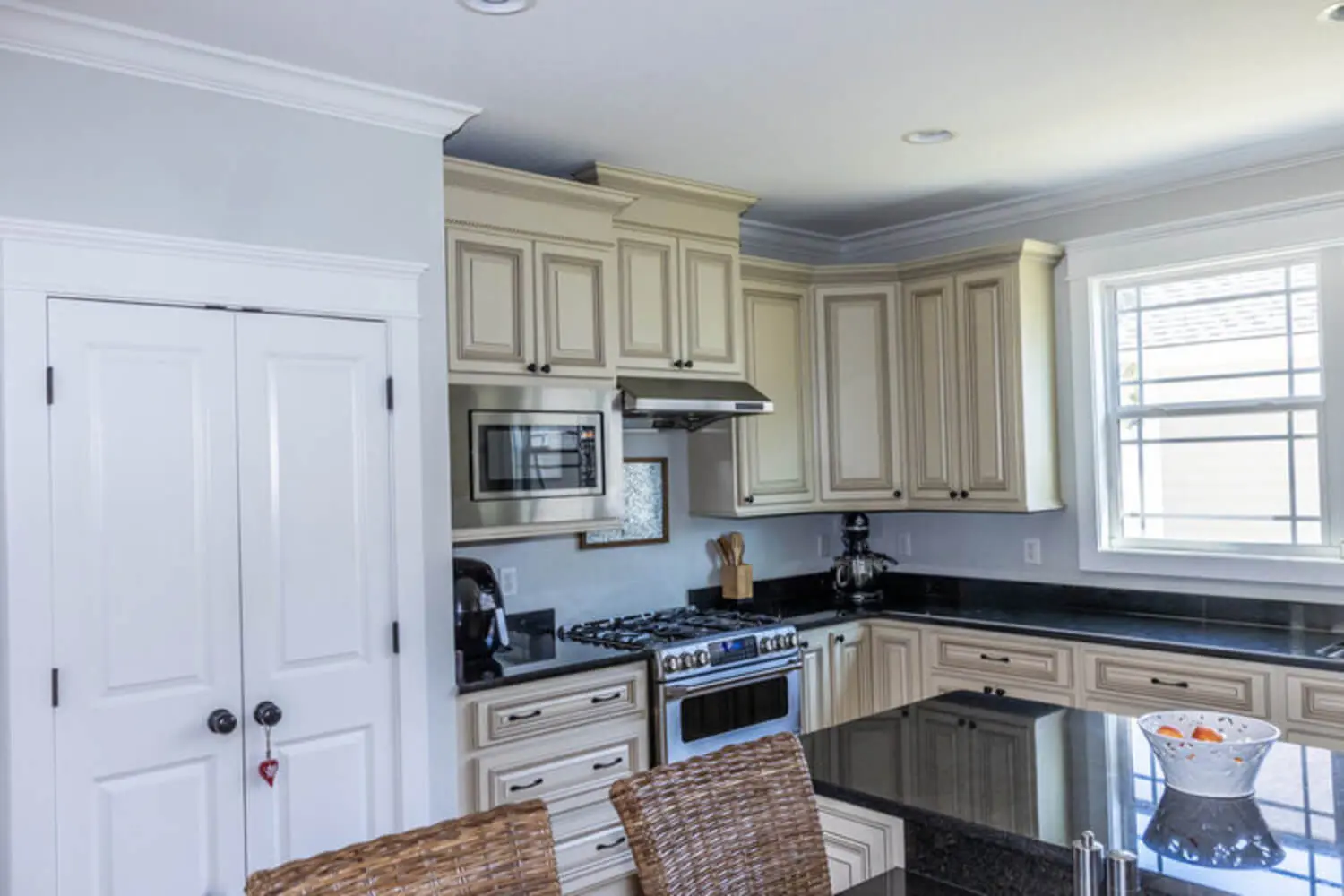
Refinishing keeps your existing doors, drawer fronts, and cabinet boxes and gives them a new finish. Refacing replaces the doors and drawer fronts and covers the boxes with new veneer. One restores what you have. The other swaps the visible parts for new ones.
Refacing is more than new doors. The veneer on the boxes separates it from simple door replacement. Refinishing is more than paint, too. It is a multi-step restoration, not a coat over old cabinets.
Neither option moves a sink, adds a cabinet, or changes your kitchen’s footprint. That shared limit keeps both cheaper than replacement.
What Professional Cabinet Refinishing Involves
Professional cabinet refinishing restores your cabinets in place through a set sequence of prep and coating steps. A skilled crew works in this order:
- Remove the doors, drawers, and hardware.
- Degrease and clean every surface, because kitchen grease blocks adhesion.
- Sand the old finish and repair dents, chips, and worn edges.
- Prime the surfaces so the new coating bonds.
- Apply durable cabinet coatings and let each coat cure.
- Reinstall the doors and hardware.
Skipped steps cause most refinishing failures. Paint over a greasy, glossy surface peels within months.
Refinishing changes color, sheen, and condition. You can move from honey oak to crisp white, try a two-tone look, or choose bolder shades through custom cabinet painting. A designer’s color consultation helps you match the shade to your counters, backsplash, and flooring.
What refinishing cannot change is the shape of your doors.
What Cabinet Refacing Involves
Refacing replaces the visible parts of your cabinets and leaves the boxes in place. A typical refacing project includes:
- New doors and drawer fronts in the style you choose
- Veneer or laminate applied over the existing boxes and face frames
- New hinges, pulls, and knobs
Refacing suits kitchens where the layout works but the door style does not. It gives you a new look in a few days of installation. It does not move walls, add storage, or repair damaged boxes. Veneer needs a sound surface underneath, so weak boxes undermine the result. The covering material varies, from wood veneer to laminate, and it affects both the look and the durability. Ask what material a contractor plans to use. Color matching between factory-made doors and site-applied veneer can also leave visible differences where the parts meet.
How Refinishing and Refacing Compare Side by Side
Five factors separate the two options, and early factors can rule one out before cost matters. Work through them in order.
Door Style Options
Door style is the clearest dividing line, because refinishing changes the color and not the shape. Paint cannot turn a raised-panel door into a flat Shaker door. The profile stays the same. Book refinishing for a new profile, and you get a freshly finished version of the door you disliked.
- Refinishing keeps your current door profile.
- Refacing lets you switch to a new profile, such as Shaker.
- A refinisher can also work on doors alone, whether that means refinishing existing cabinet doors or painting new ones, a bridge option the final section covers.
Cabinet Material and Condition
Your cabinet material limits your options more than any other factor. Real wood shows grain. Laminate looks uniform and feels like plastic.
- Solid wood and MDF refinish well, because both hold paint and stain.
- Laminate and thermofoil make poor candidates for refinishing, because coatings struggle to bond to them.
- Refacing needs sound boxes, because veneer cannot hide water damage or sagging.
Older Andover and North Andover homes often have solid wood cabinets in good shape. That combination suits either option, so door style and budget usually break the tie.
Cost Relative to Full Replacement
Refinishing usually costs the least, refacing falls in the middle, and full replacement costs the most. Refacing costs more because you pay for new doors, veneer, and hardware. Replacement adds demolition, new boxes, and installation. Refinishing keeps your boxes, so you pay mainly for prep, coatings, and labor. Ranges can overlap at the edges, so treat this order as typical, not guaranteed.
Several factors move the price within each option:
- The number of doors and drawers
- The amount of repair your cabinets need
- A full color change versus a light refresh
- Your door style and hardware choices
- The size of your kitchen
The cheapest option is not the best value when it suits your kitchen poorly. Refinishing laminate that cannot hold a coating wastes money, and so does refacing boxes with water damage.
Only an in-home estimate gives you a real number for your kitchen. Online price ranges cannot account for your cabinets.
Timeline and Kitchen Disruption
Refinishing usually takes about a week on site and needs no ordering wait. Refacing installs quickly but starts with a long delay.
- Refinishing: crews prep, coat, and cure in stages.
- Refacing: a manufacturer must build your custom doors and drawer fronts first, and that wait often runs several weeks.
- Replacement: demolition and installation can leave your kitchen unusable for weeks.
Expect limited access to your cabinets during either project, but the disruption stays far smaller than a full tear-out. Homes built before 1978 may contain lead-based paint. Sanding disturbs it, so ask whether your contractor holds EPA lead-safe certification.
Long-Term Durability
Each option fails in its own way, so durability depends on the quality of the work.
- Refacing veneer can lift or peel near ovens, dishwashers, and sinks when heat and moisture reach the edges.
- Added veneer thickness can leave doors and drawers tight, so they stick or close poorly.
- Refinished coatings can chip or peel when a crew skips cleaning, sanding, or priming.
A well-prepped refinish with cabinet-grade coatings can last many years. In both cases, the installer’s prep matters more than the product.
Matching the Right Option to Your Kitchen
Two questions narrow your choice: do you like your door profile, and are your boxes sound? A liked profile on sound boxes points to refinishing. A disliked profile on sound boxes points to refacing or new painted doors. Failed boxes point to replacement. The four situations below cover most kitchens.
When Refinishing Is the Better Fit
Choose refinishing when you like your door style and your cabinets are sound.
- Your doors have a profile you like, or you can live with the one you have.
- Your boxes are solid wood or MDF in good condition.
- The finish looks dated or worn, but the layout works.
- You want the lowest cost and the shortest disruption.
That description fits many older Andover and North Andover kitchens: solid cabinets wearing a tired finish.
When Refacing Is the Better Fit
Choose refacing when you want a new door profile and a new surface across the whole cabinet.
- You dislike your door profile and want a different one.
- Your cabinet surfaces cannot take a new coating, as with laminate or thermofoil.
- Your boxes and face frames are sturdy and well fitted.
- You can wait for custom doors, and your budget sits between refinishing and replacement.
Surface decides this one. Solid wood or MDF boxes that can take a coating usually suit painted doors better.
When New Painted Doors on Refinished Boxes Are the Better Fit
This middle path suits you when you like your boxes but dislike your door style. It fits boxes that can take a coating, which sets it apart from refacing. A crew refinishes the boxes, then hangs new doors that it sources and paints to match.
- You get a new profile, such as Shaker, without veneer on the boxes.
- The new doors still add some lead time.
- The whole kitchen shares one painted finish.
This option combines door replacement with refinishing. It does not count as refacing. It suits dated raised-panel doors on sound boxes.
When Full Replacement Is the Better Fit
Choose replacement when the boxes have failed or your layout must change.
- Sink bases show water damage or swelling.
- Boxes sag, warp, or crumble.
- You want a new layout or more storage.
One swollen sink base does not automatically mean replacement, because localized repair can work. Widespread failure does. Paint and veneer both hide surface flaws, not structural ones. Covering damaged boxes wastes your money.
Your Door Style and Cabinet Boxes Decide Which Option Fits
Refinishing restores the cabinets you have, and refacing replaces the doors and covers the boxes with veneer. Your door style, cabinet material, and box condition decide which one fits. Skip those checks, and you risk paying for doors you did not need, or refinishing boxes that needed replacing.
Your own cabinets are the best test. To weigh them against every option in this guide, request a free, no-obligation estimate through our Get a Free Quote form. At Suetam Painting and Finishes, Mateus, our owner, walks through your kitchen, explains the options for your cabinets, and provides a detailed written proposal. Every project also includes a free color consultation with our designer. We look forward to helping you choose.